
Electrical testing on parts, components and systems
We test electronic, electrical and electromechanical parts, components and systems for functionality, quality,
safety and compliance with the various technical specifications.
With the help of a wide range of modern test methods and the extensive specialized knowledge of our
employees, we test connectors, switchgear and switchgear combinations across all industries;
from short-circuit tests to operating behavior and insulation tests.
Whether electrical engineering, automotive, rail vehicles or mechanical engineering – we work according to
German and international standards and guidelines or according to factory specifications.
All relevant test laboratories are accredited according to DIN EN ISO/IEC 17025.
Get more information Electrial testing automotive Search for standards
Our portfolio

E-Mobility
Read more
Environmental Simulation and Vibration
Read more
Medial Load Testing
Read more
Automobiles
Read more
Railway
Read more
Materials Testing Metals
Read more
Material Testing for Plastics and Composite Materials
Read more
Materialography
Read more
Damage analysis
Read more
Materials databases
Read more
Software and Software Solutions
Read more
Training and Seminars
Read more
High-performance testing
In our high-performance test facility, we test electrical components, parts, and systems for their short-circuit behavior, switching capacity, operational behavior, and electrical service life. By adding a high-performance capacitor bank, we can also reproducibly simulate dynamic high-current loads with rapid current rises and low test circuit inductance. This allows us to evaluate the electrical functionality, safety, and reliability of components and assemblies under realistic load conditions.
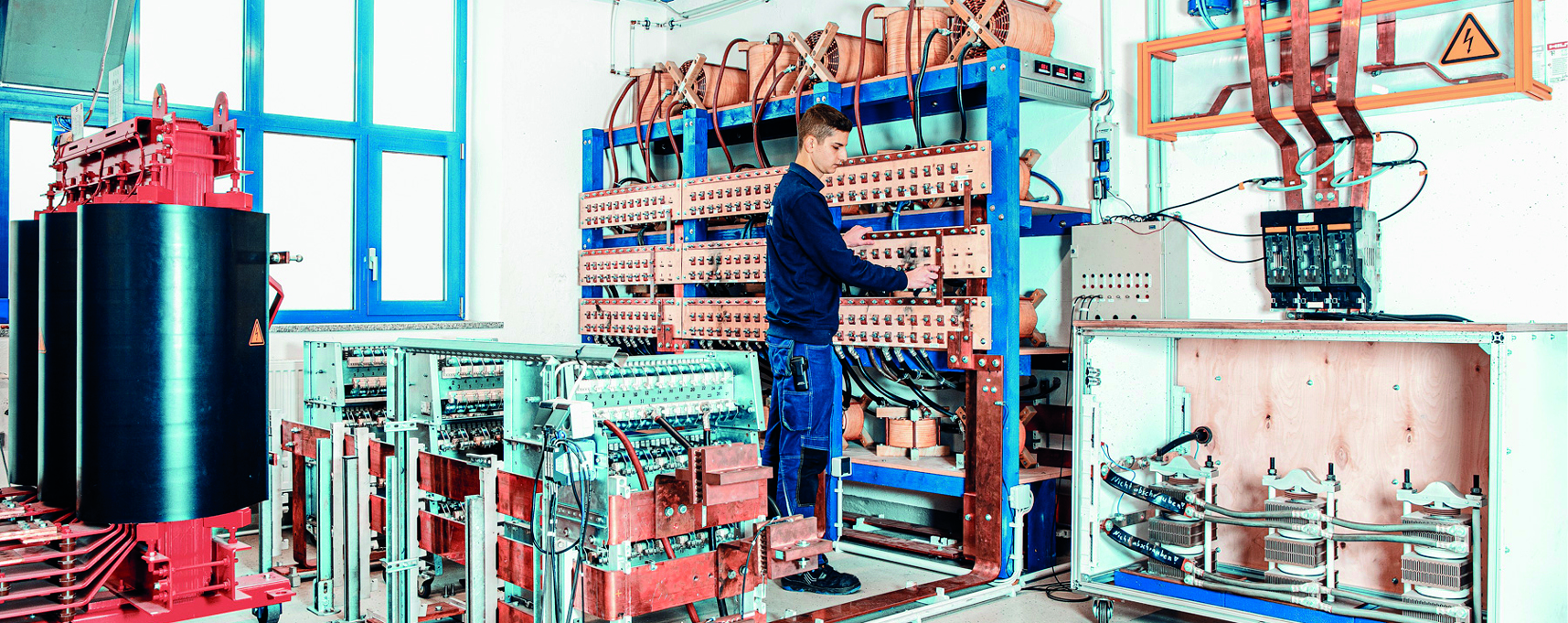

High Performance Test Field 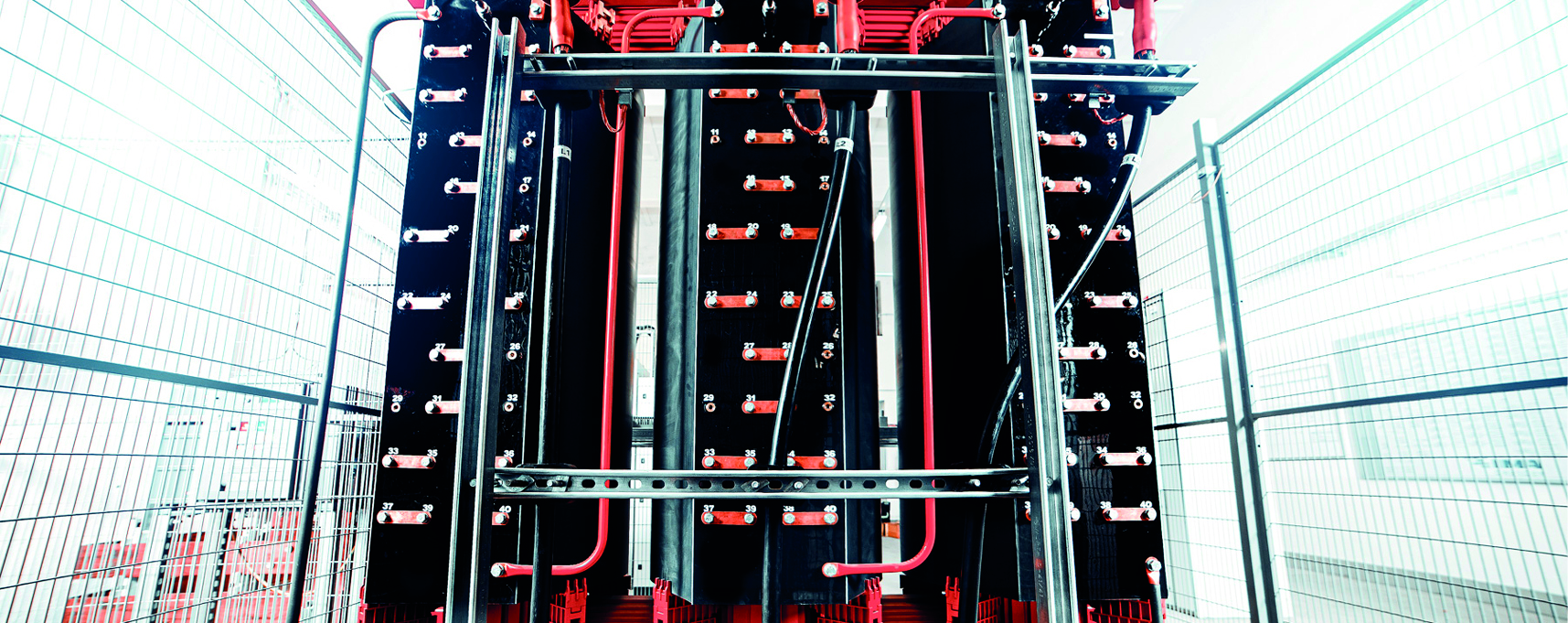
High Performance Test Field 

Capacitor – High-Performance Test Facility up to 1,100 V and 35 kA
Whether it’s short-circuit testing, switching capacity, operational behavior, electrical life, or continuous current testing: With our high-performance and high-current test benches, we test electrical components under AC and DC loads. The hybrid capacitor high-performance test bench also enables highly dynamic current rises in the microsecond range (<1 ms) with achievable test circuit inductances of less than 10 µH. Voltage ranges from 110 V DC to 1,100 V DC with test currents up to 35 kA are available. Resistive, inductive, and capacitive loads can be simulated.

Products
- High-current components for the automotive industry
– DC fuses
– DC relays
– Battery isolation systems (e.g., pyrofuses)
– Cell connectors
– Battery management systems - Switch-fuse units
- Contactors and motor starters
- High-current connectors
- Switchgear assemblies
- Terminal blocks and connections
- Power, load-break, and mains transfer switches
Performance overview
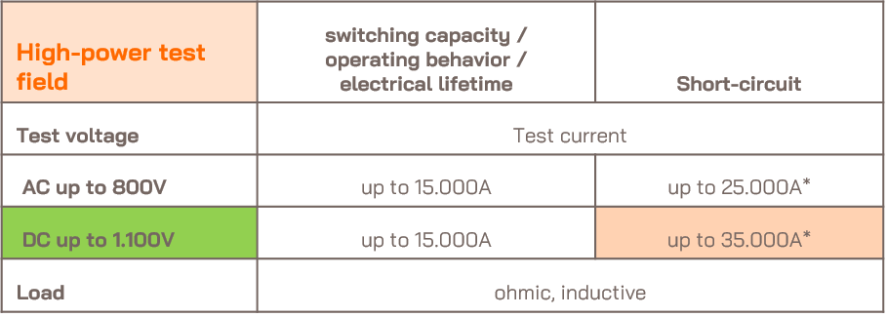
*up to 0.06 s or when protected with fuses or another protective device
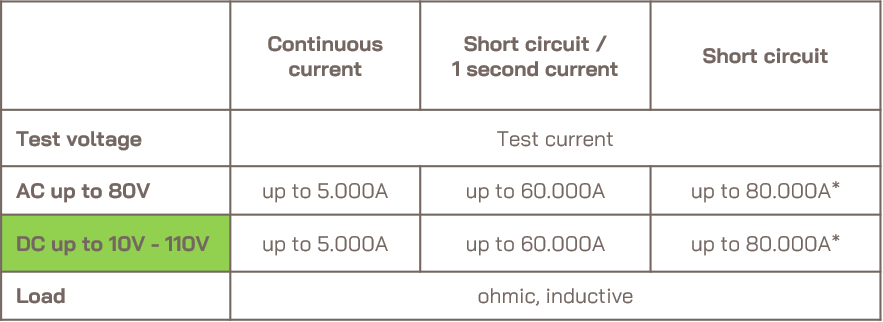
* up to 0.3 s or when protected with fuses or another protective device
Electrical Lifetime testing
For electrically, pneumatically and manually operated switchgear, we have flexibly deployable test bays to respond quickly, reliably and cost-effectively to the different requirements for testing electrical / mechanical service life .
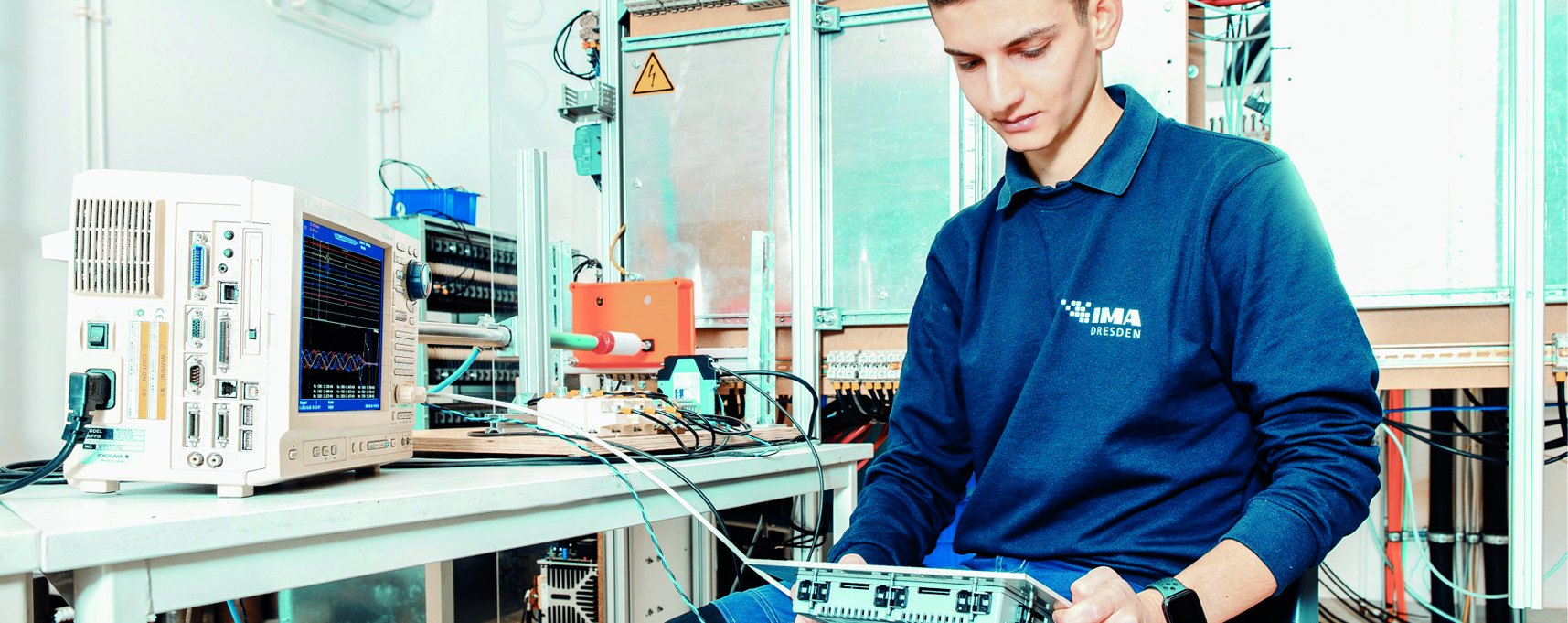
Electrical lifetime testing 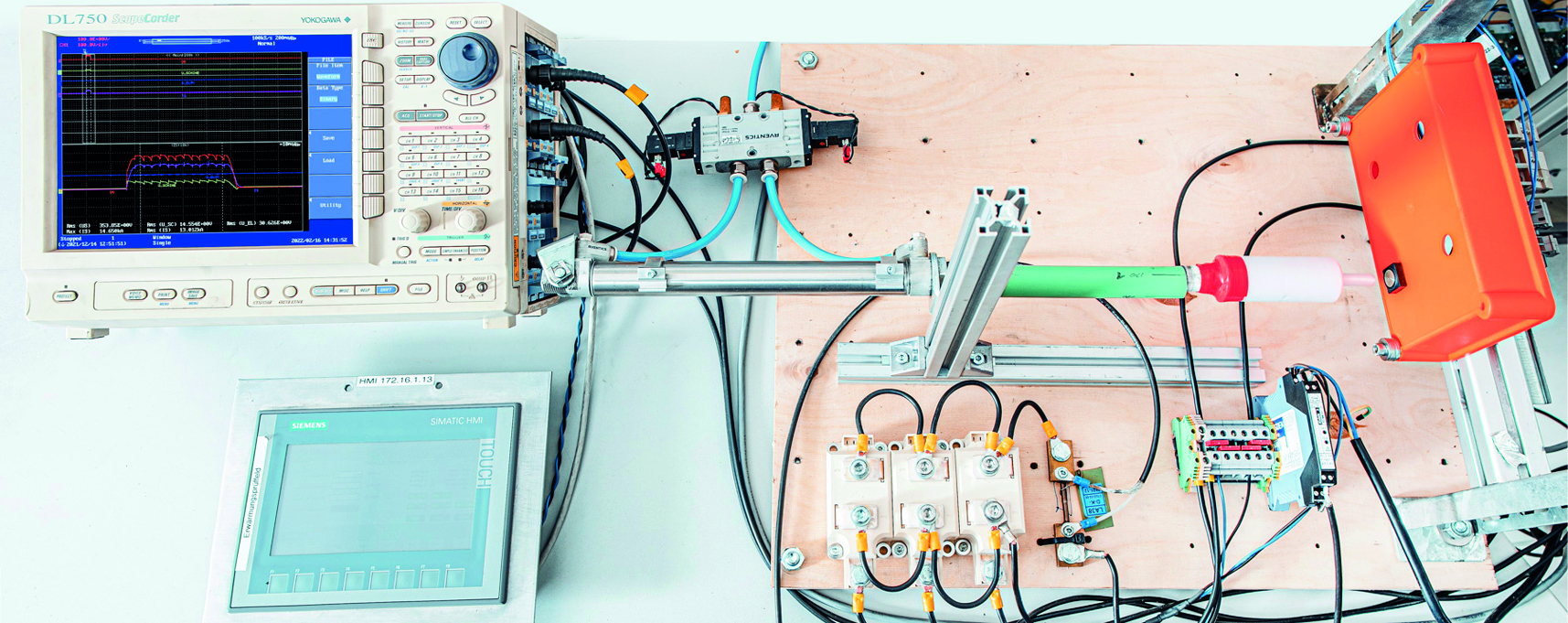
For electrically, pneumatically and manually operated switchgear 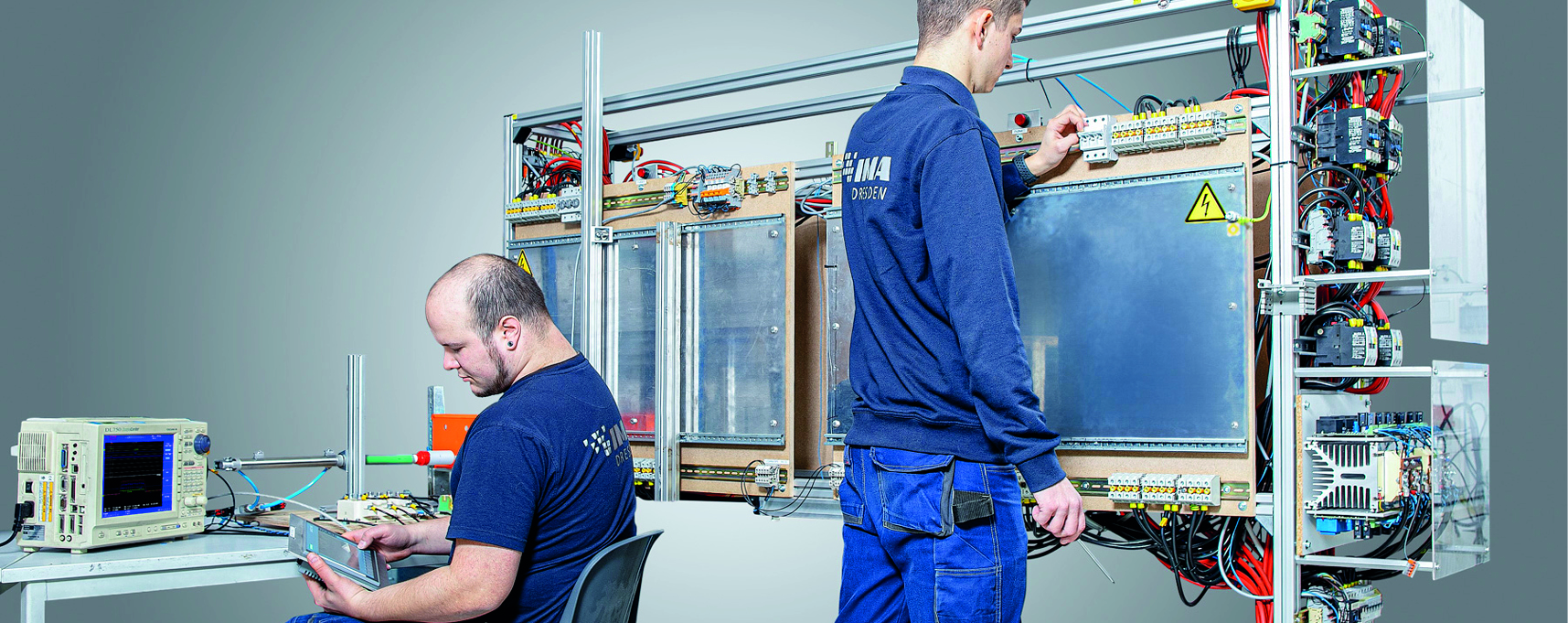
Products
- Control devices, proximity switches, signalling switches
- Relays, motor starters
- Switch-fuse units
- Contactor
Performance overview
| Testing voltage | Test power | Test current |
| AC up to 0–1,000 V | 140 kVA | up to 200 A |
| DC up to 1,300 V | 140 kVA | up to 200 A |
| Load | ohmic, inductive ohmic, inductive | ohmic, inductive ohmic, inductive |
Heating and continuous current testing
Heating tests on electrical equipment and switchgear are used for the thermal dimensioning of contacts, current paths and their supporting components made of insulating material. Furthermore, it is to be proven that the permissible limit values are complied with according to national and international standards.
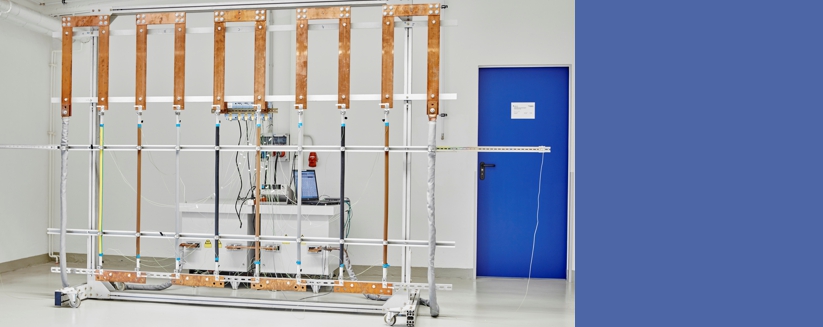

NachweisVerification of aging resistance on Frame clamps 630 A der Alterungsbeständigkeit an Rahmenklemmen 630 A
The automated laboratory offers versatile testing possibilities for switchgear and switchgear assemblies:
- Continuous data collection for
- Temperature
- Electricity
- Voltage (determination of partial and total power loss)
- Voltage drops/contact resistance
- Cyclical electricity control (intervals/cycles)
- Overlay with climate tests and vibration tests
Typical tests
- Heating and continuous current testing
- Proof of ageing resistance
- Overload tests of devices with fuses and thermal trips
- Determination of derating curves (electricity can be adjusted to target temperature, e.g. connection area)
Typical device groups
- Terminal blocks and circuit points
- Heavy-duty connectors
Performance overview
| Alternating current* | 3-phase up to 2,000 A 1-phase up to 5,000 A | regulated |
| Direct current** | up to 10 000 A | regulated |
* testing at low voltage ≤ 5 V
** testing at low voltage ≤ 10 V
Insulation testing
Insulation tests are used to assess the functionality and safety of electrical devices and systems. Furthermore, insulating materials and constructive insulation solutions can be assessed.
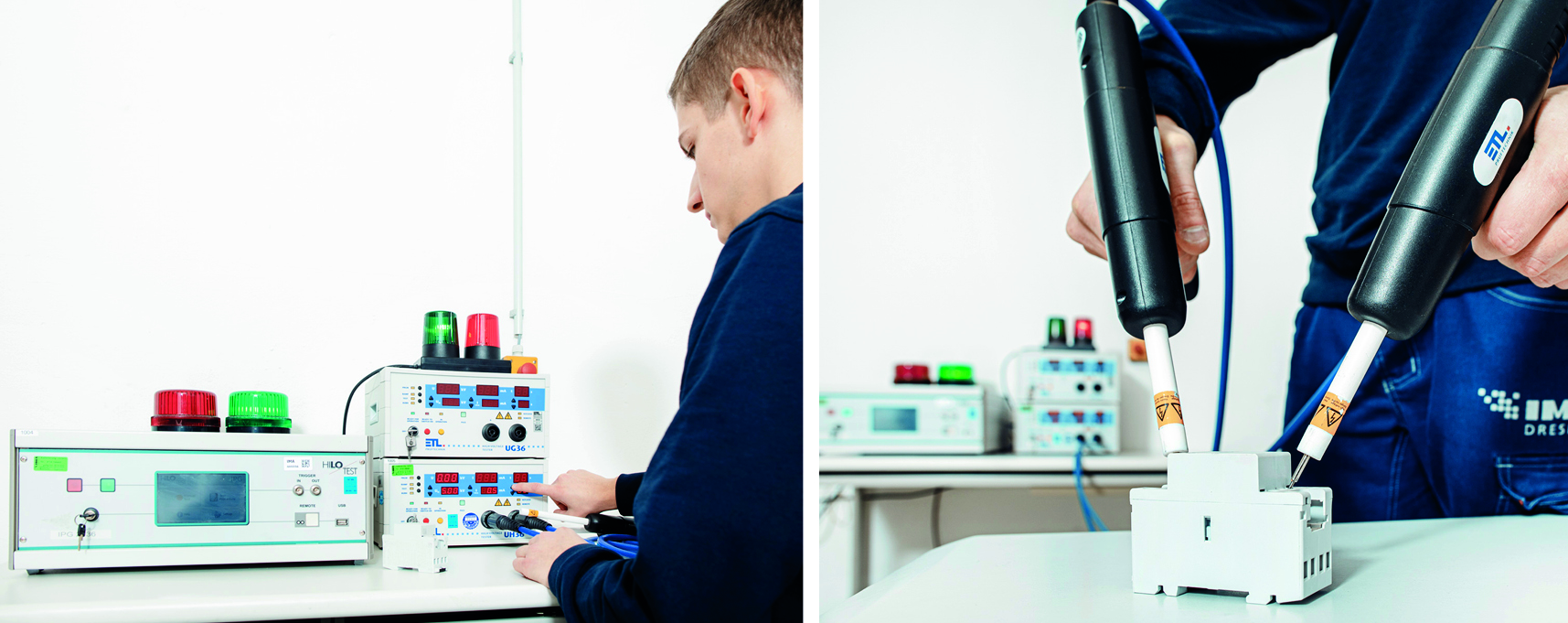
Insulation testing
Test methods
- Measurement of operating-frequency dielectric strength up to 5 kV AC
- Measurement of the operating-frequency dielectric strength up to 6 kV DC
- Impulse withstand voltage measurement up to 24 kV; 1.2µs/50µs (36 joules)
Other testing Options
- IP protection class tests
- Impact resistance test (IK code)
- Environmental simulation in the salt spray chamber
- Climatic tests (temperature and humidity), can be combined with other tests
- Vibration and shock testing
- Material tests of plastics and metals
- Strength of operating parts, e.g. in case of misuse forces
- Mechanical strength of clamping points
- Bending test
- Tensile test
- Creep and clearance testing
- Glow wire test and flammability